
James Sanders @jas_np@mastodon.social
Somewhere, I think there’s an engineer who is really good at meeting deadlines, now angrily shaking their fist at society because a bunch of people playing with LLMs are calling themselves “prompt engineers” and just like that, all of their personal branding has evaporated.
Apr 29, 2023, 06:48 · · Mastodon for iOS · 1 · 4

![[RAMAGE] – Dr Bruno Lezzi at the GCSP](https://christianbuehlmann.com/wp-content/uploads/2023/05/2023_04_28_Book_Launch_Bruno_Lezzi-12-900x600.jpg "[RAMAGE] – Dr Bruno Lezzi at the GCSP")

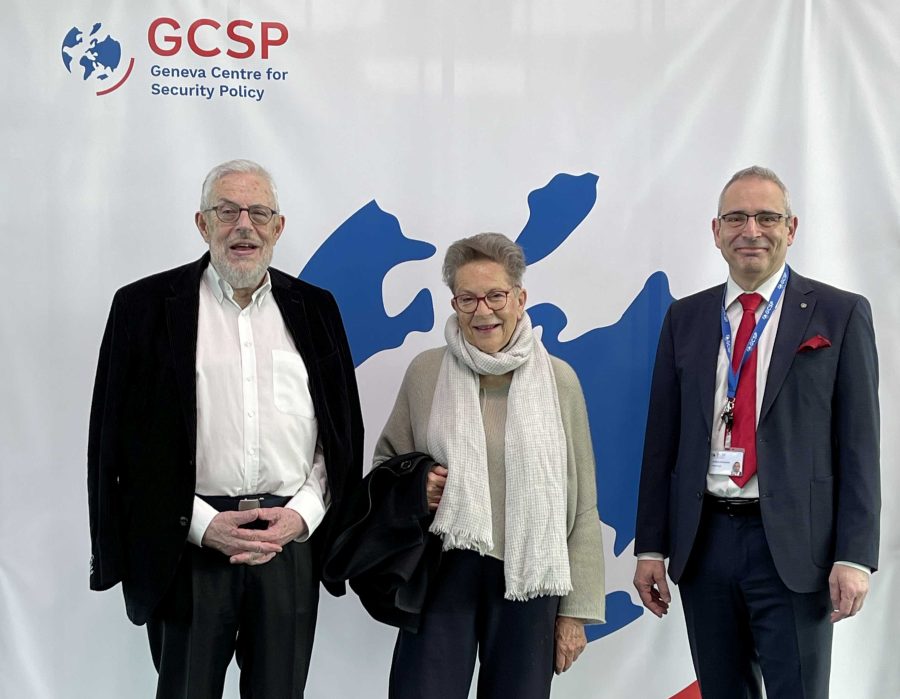
Avant sa lecture d’auteur, Bruno Lezzi, accompagné de son épouse Adrienne Lezzi-Hafter, ont visité le GCSP en ma compagnie.
Almost exactly six months after Twitter got taken over by a petulant edge lord, people seem to be done with grieving the communities this disrupted and connections they lost, and are ready, eager even, to jump head-first into another toxic relationship. This time with BlueSky.
BlueSky’s faux-decentralization
BlueSky differentiates itself from Hive, Post, and other centralized social media newcommers by being ostensibly decentralized. It differentiates itself from the Fediverse by not being the Fediverse, and by being funded by *checks notes* Twitter. Oh, and by being built by Silicon Valley techbros, instead of weirdos who understand consent and how important moderation is.
28 April 2023 12h00 – 14h00
Zwischen Militär, Journalismus und Politik
Internationale Perspektiven
Bruno Lezzi – Autorenlesung
The conference is held in German and is exclusively on-site at the Geneva Centre for Security Policy.
- Light snacks following the event
The dramatic changes in world politics call for a renewed approach to security policy. It is difficult to find tangible solutions without knowledge of how the situation developed during the Cold War and after the strategic shift in the early 1990s.
Bruno Lezzi, a security and defence policy specialist, recalls essential milestones in this history in his latest book Von Feld zu Feld – Ein Leben zwischen Armee, Journalismus und Politik. He presents an unvarnished analysis based on his experiences as editor of the NZZ, lecturer for security policy at the University of Zurich and colonel (general staff) in the Swiss Armed Forces.
His visits to hot spots during the wars in the Balkans, Chechnya and Afghanistan have enabled him to draw concise portraits of the descriptions of these decades of tension.
You should have a personal website not because you need to grow an audience, and turn your hobbyist writing into a profession.
You should have a personal website not because you’re an expert on some subject, and it would be cruel to deny the world your wisdom.
You should have a personal website not because you think you’re important.
You should have a personal website not because the world is in need of your highlight reel.
You should have a personal website because I think the online world is as real as the offline world. You have a presence in one, and you should have a presence in the other.
Stock images strongly influence the ways in which non-expert audiences think about and understand the topics they illustrate. This is why it is worrying that research has repeatedly shown that many images of artificial intelligence are misleading and unhelpful.
This guide presents the results of a year-long study into alternative ways of creating images of AI, involving roundtable and workshop conversations with over 100 experts from fields including the tech sector, media, education, research, policy and the arts. Its aim is to advise people who work with images of AI – from journalists to communications officers, from educators to activists – on sourcing and creating the best images for communicating accurately and compellingly.

Very funny team building evening at the Quiz Room Geneva. My colleague Anne-Caroline and myself won the « golden buzzer ».

Pierre Steiner aborde les questions classiques de la philosophie de l’esprit par un biais inattendu: celui de la technique. Une vision des choses appelée à avoir de profondes répercussions.
par Mark Hunyadi
Pierre Steiner est un philosophe belge établi en France, encore jeune (il est né en 1980), mais dont les travaux sont pourtant connus de longue date. Actuellement professeur à l’Université de technologie de Compiègne, il suit une voie très originale, qui permet de renouveler audacieusement des problèmes très classiques de philosophie de l’esprit, laquelle interroge (depuis Platon!) les rapports de l’esprit humain au monde. Qu’est-ce que penser? Comment l’esprit est-il lié aux objets qu’il perçoit du monde? Ce sont là de vieilles et nobles questions, mais que Pierre Steiner aborde par un biais inattendu: celui d’une philosophie de la technique.
Ainsi, l’un des lieux communs les plus répandus sur la technique (y compris parmi les philosophes) consiste à dire que celle-ci serait un ensemble d’outils ou de dispositifs servant à réaliser telle ou telle fin, fixée par l’être humain. Celui-ci aurait donc des buts, et la technique permettrait de les réaliser. Les buts seraient «dans la tête», et telle ou telle technique serait le moyen de les atteindre. Qu’y a-t-il donc à redire à cette vision de bon sens?
![[Note] – Traduction du terme « Gewehrgriff »](https://christianbuehlmann.com/wp-content/uploads/2023/04/OMAS_Filarmonica_Notenfeder-900x577.jpg "[Note] – Traduction du terme « Gewehrgriff »")
Dans l’article « Militärische Ausbildung » du HLS, écrit en allemand par Hans Senn, Laurent Auberson, traduit « Gewehrgriff » comme « maniement formel de l’arme ». Je n’ai pas trouvé de traduction dans le « TERMDAT – La banque de données terminologiques de l’administration fédérale ». La Tribune de Lausanne du 12 mars 1958 reprend en page 3 le communiqué du DMF sur l’abolition du « maniement d’arme » et parle de « mouvements de drill ».
Source de l’image : Wiktionary contributors, « fountain pen, » Wiktionary (accessed April 19, 2023).
Les cadres du renseignement doivent repostuler pour garder leur job – Mais pas leur directeur
Le Service de renseignement de la Confédération (SRC) a choisi de modifier son organisation. Mesure spectaculaire: les membres actuels de la direction se doivent de repostuler s’ils désirent conserver leur poste de travail.
Si ma mémoire est bonne, à chaque réorganisation du DDPS, les cadres ont dû repostuler. C’est, toujours sur la base de mes souvenirs, surtout le cas lorsque les structures internes changent (DMF 95, Armée XXI / Groupement défense, …). Ce n’est donc pas si spectaculaire que cela.
![[RAMAGE] – Website for education](https://christianbuehlmann.com/wp-content/uploads/2022/12/HOME_Blog-716.jpg "[RAMAGE] – Website for education")
IndieWeb for Education is the application of indieweb principles to one’s personal site with a particular emphasis on use cases for education, pedagogy, research, academic samizdat, and collaboration. It is generally synonymous with the aims and goals of the A Domain of One’s Own or DoOO movement.
While the general principles of IndieWeb can apply to anyone’s site, in an attempt to help foster the next generation of potential IndieWeb adopters who may be focused on teaching, education, and research, whether at the K-12, undergraduate, graduate, post-doc, or other levels, we’re compiling some specific hints, tips, pointers, and examples which may be germane to these particular audiences to assist in their motivation and adoption.
I mean, what does an alternative to ed-tech as data-extraction, control, surveillance, privatization, and profiteering look like? What does resistance to the buzzwords and the bullshit look like?
I don’t have an answer. (There isn’t an answer.) But I think we can see a glimmer of possibility in the Indie Web Movement. It’s enough of a glimmer that I’m calling it a trend.
—Audrey Watters in Hack Education
If you hired an employee who regularly made up facts, info and stories to make their work answers sound more plausible and entertaining, wouldn’t you instantly fire the person? Yet, this is what tech people are gushing over. I don’t get it. Takes from real AI development/advances
Friends in physics say ChatGPT is useless.
Friends in PR say it will transform their industry.
Make of that what you will.
18 mars 2023, 22:08 · · 34 · 44